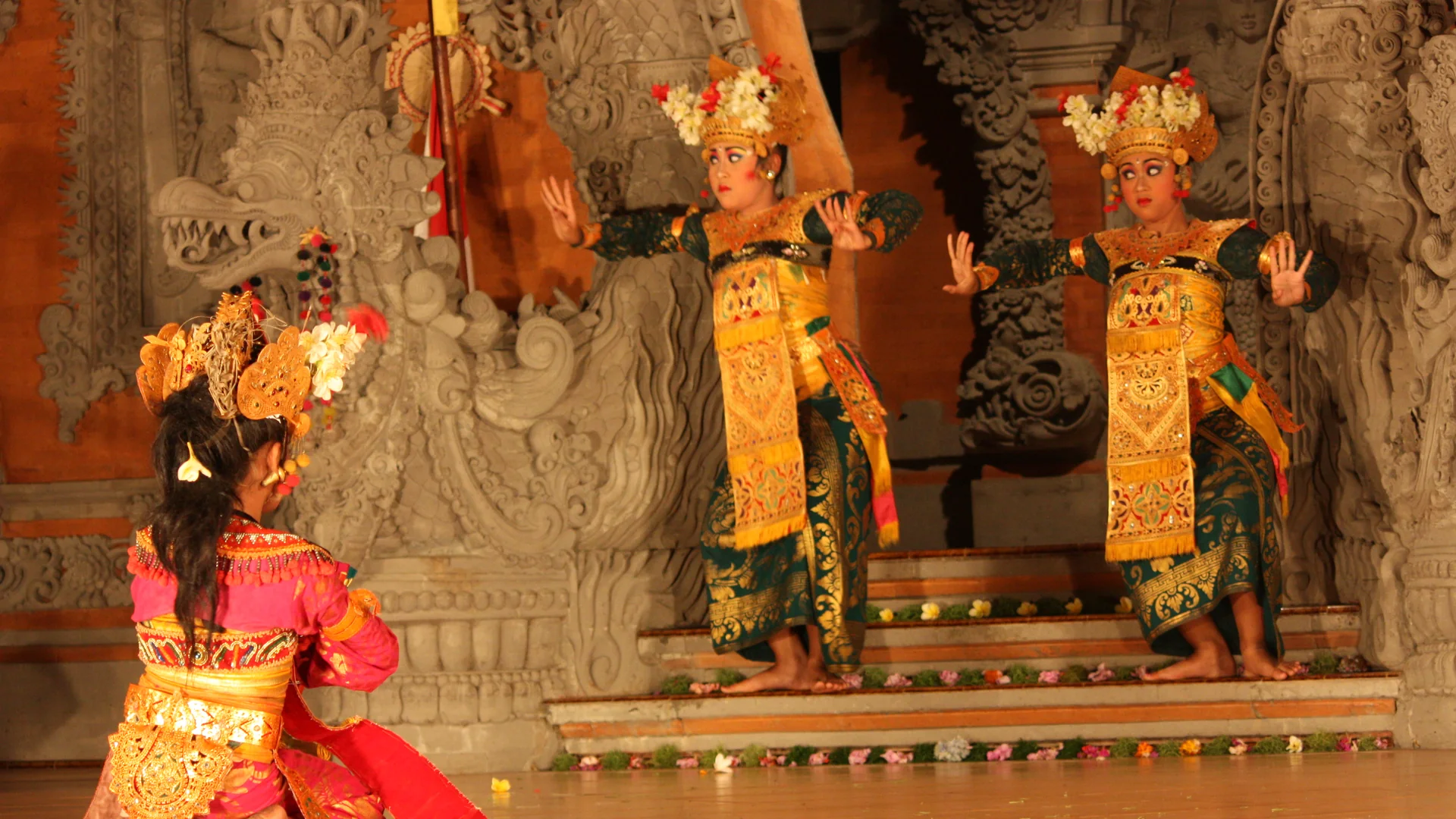
The legong probably began in the 19th century as entertainment for Bali's royal courts. One legend credits a prince of Sukawati who fell ill and dreamed of two maidens dancing to gamelan music, then had the dance made real once he recovered. Others trace it to sanghyang dedari, a ceremony in which two young girls are possessed by benevolent spirits.
The answer, first
Is the Ubud Palace legong dance worth it, and do you need to book?
The short answer
Yes, for most visitors staying in or near Ubud. For about ninety minutes each evening, dancers in gold-painted costumes perform Balinese dances, the legong among them, to a live gamelan in the open courtyard of Ubud's palace. You do not strictly need to book: tickets are also sold at the gate, and neither route reserves a seat. Booking settles your ticket in advance, but it cannot be cancelled or refunded, and children pay the adult rate.
What it is
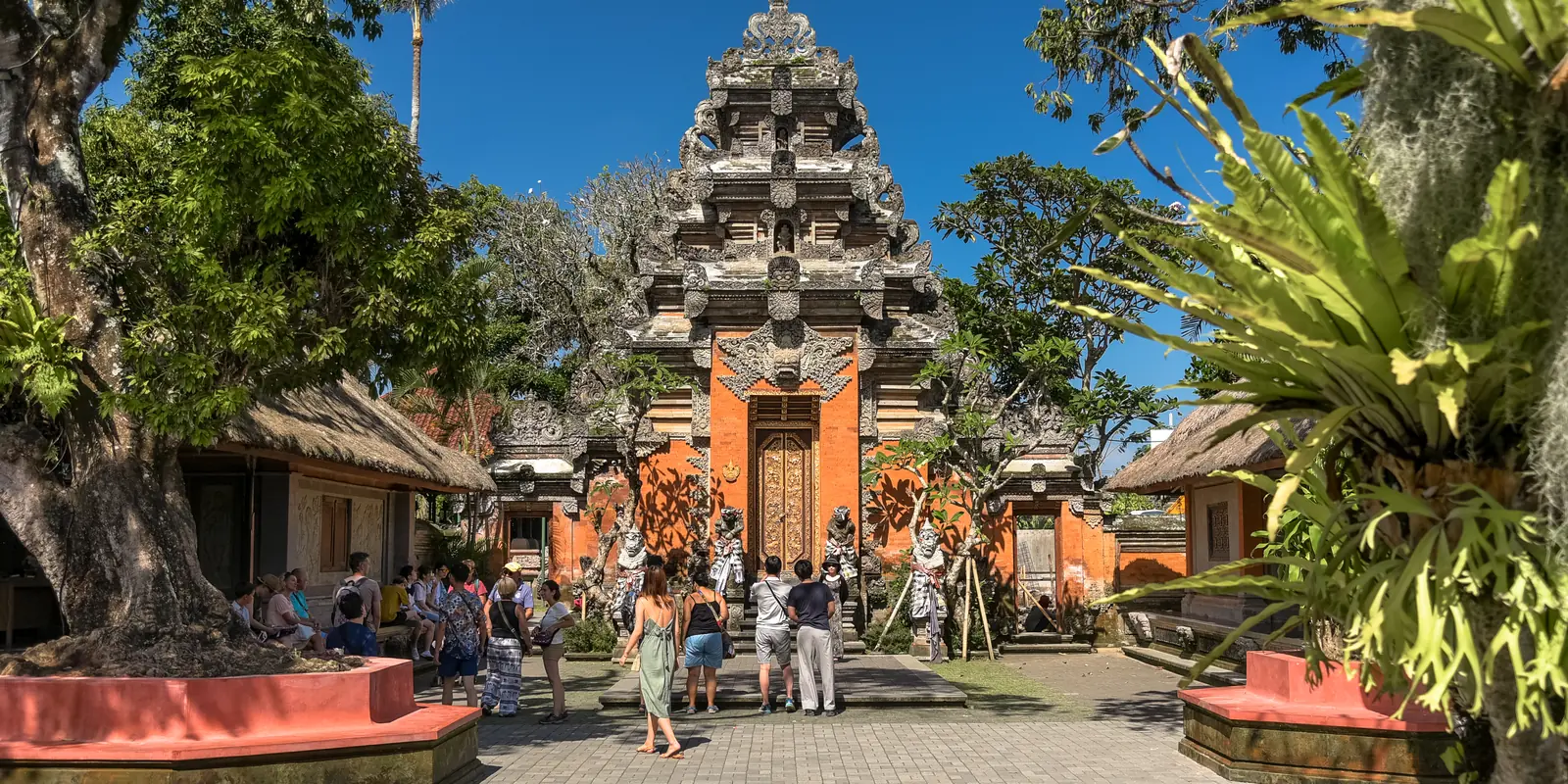
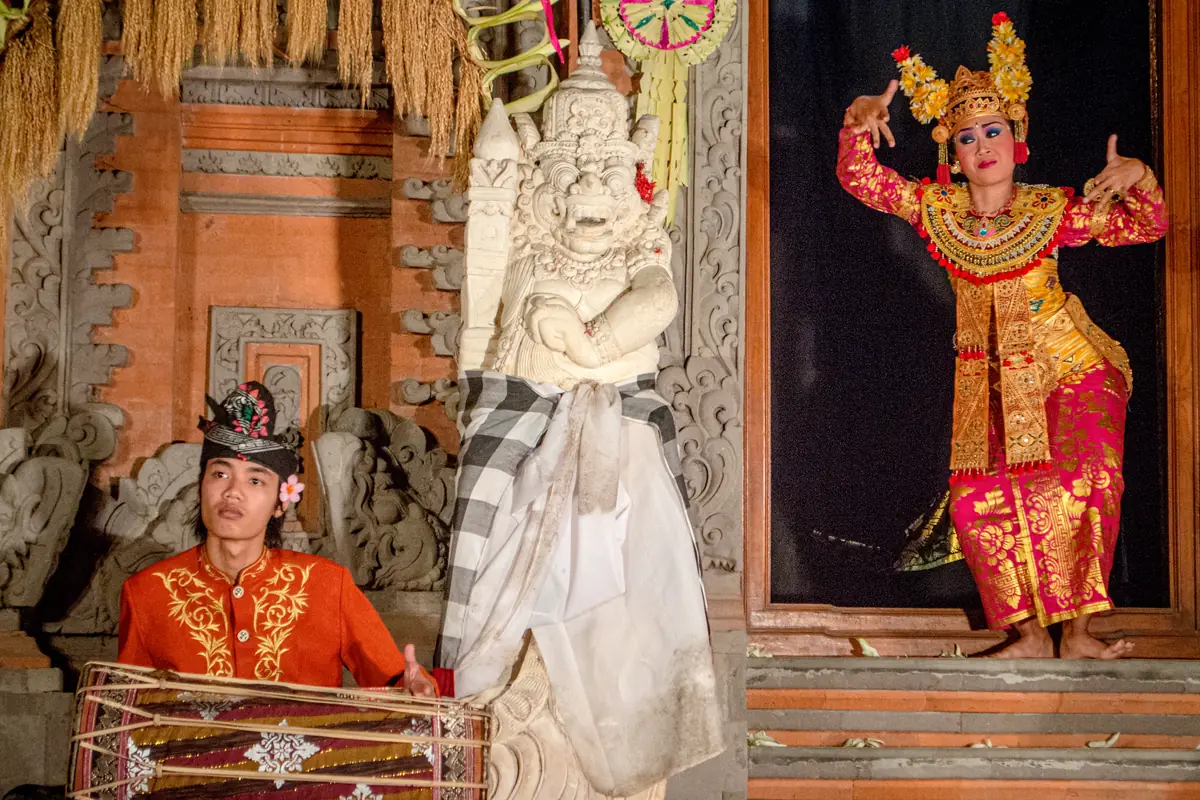
An evening of dance in the courtyard of the palace that Ubud's royal family still owns, on a stage backed by a carved gateway and guardian statues. A gamelan of bronze metallophones, gongs and drums plays throughout, and the legong, a refined court dance of tiny finger movements and darting eyes, is part of the programme. Seating is unreserved, so arrive at least 45 minutes early for the front rows.
What it isn't
It isn't a theatre production with fixed seats and a lighting rig: it is a low-cost cultural evening on hard benches in an open courtyard, and the gamelan is loud. It isn't one long legong; several dances follow one another, and which ones appear is the company's choice. And it isn't flexible: the sale is final, whatever the weather does that night.
The palace evening at a glance
- Running time
- About ninety minutes.
- On stage
- Balinese dances with a live gamelan.
- Seating
- Unreserved; the front rows go to the early.
- Booking
- Non-refundable; children pay the adult rate.
The story the dancers mime
The Lasem story the legong kraton mimes
No programme is printed here, because the company decides each night's dances. These are the scenes of the legong kraton's best-known tale, the story of the king of Lasem, as Wikipedia tells it in English and in Indonesian.
-
PreludeThe condong
An attendant sets the scene
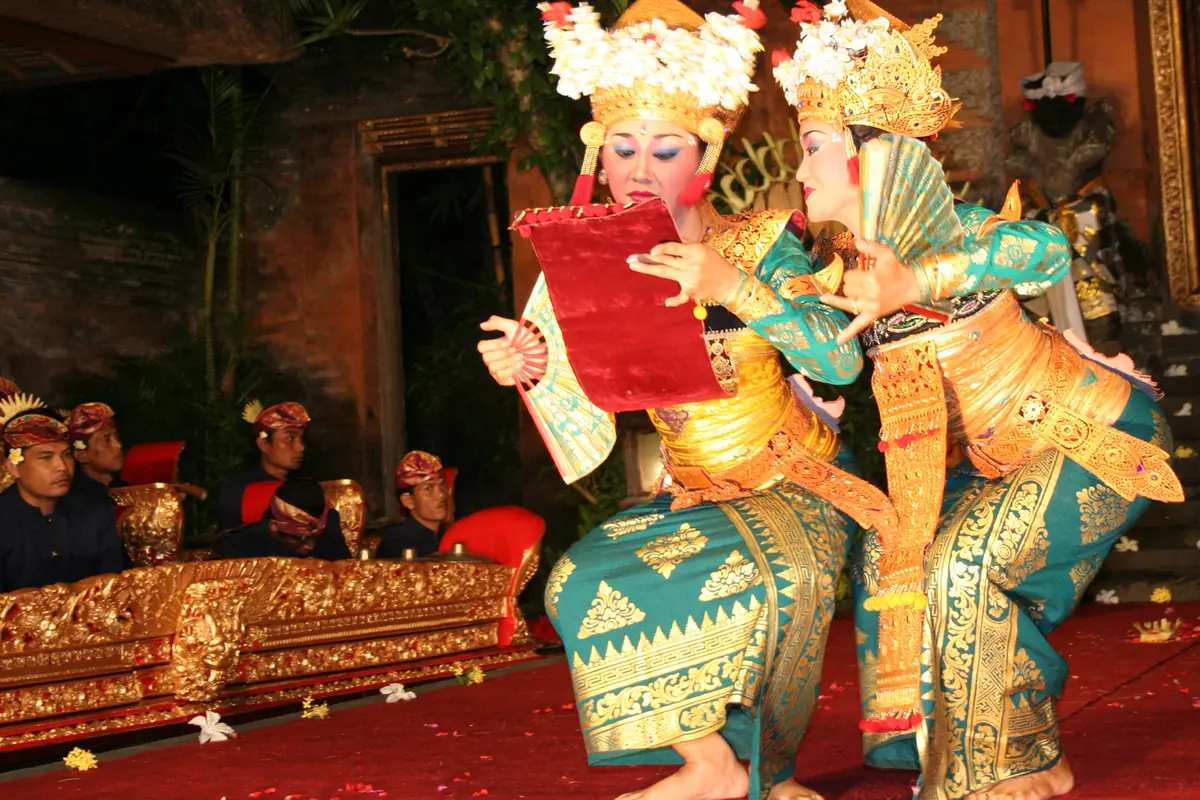
The condong, a court attendant, dances first and alone, setting the scene before the two legong appear. She presents them with their fans; in the Indonesian telling she is the only one of the three without a fan.
-
FansTwo legong
Two dancers take up the tale
The two legong open their fans, and from here the story is carried in elaborate, stylised pantomime. Fingers, eyes, footwork and fans do the work that words would do elsewhere.
-
DesireThe king
Lasem wants a princess
The king of Lasem, an East Javanese ruler, wants to marry Princess Rangkesari. She detests him; the Indonesian article adds that she is already promised to Prince Panji of Kahuripan.
-
CaptureThe forest
Lost, then taken
Rangkesari runs away and loses her way in the forest, where Lasem captures her and shuts her away. In the Indonesian version he simply carries her off.
-
WarHer family
Her kin march on Lasem
Her family will not give her up. English Wikipedia makes the rival king her father or her brother; the Indonesian article names her brother, the king of Daha, who declares war and marches on Lasem.
-
OmenThe bird
A bird foretells his death
As Lasem goes out for the final assault, a monstrous bird attacks him and foretells his death: a raven in the English telling, a death-bringing garuda in the Indonesian one. The condong returns to dance the bird.
-
FallThe battle
The king falls
The Indonesian article completes the tale: Lasem escapes the bird but dies in battle against the king of Daha. Visitors are usually shown excerpts of legong dramas rather than every scene.
-
RootsThe romances
Where the tale comes from
English Wikipedia places the story in the Malat, a collection of heroic romances; the Indonesian article traces it to a branch of the Panji tales set in the Kadiri kingdom of the 12th and 13th centuries.
Sources: Wikipedia's English and Indonesian articles on the legong, and its article on Balinese dance. Where the two tellings differ, both are given.
How a court dance reached the public
A dance born at court
Girls in gold, then everyone
Traditionally the dancers were girls who had not yet reached puberty and began rigorous training at about five. Today legong dancers may be of any age. The form lost ground in the early 20th century to the explosive kebyar style from north Bali, and the work of reviving older legong began in the late 1960s.
On UNESCO's list
In 2015 UNESCO inscribed three genres of traditional Balinese dance on its list of intangible heritage: sacred, semi-sacred and dances for the community's enjoyment. The legong kraton is one of the nine dances named, in the last of those genres, while the sacred dances are traditionally kept for the temples.
From the main street to the last bow
The shape of an evening at the palace
Your ticket shows the start time. What follows traces a visit from the main street to the final dance, and promises nothing about any one night's programme.
- 1Walk
Along the main street
The palace stands where Jalan Monkey Forest meets Jalan Raya Ubud, the town's main street.
- 2Voucher
Straight to the palace
There is no separate meeting point: go directly to the palace and show your voucher for admission.
- 3Bench
Take a seat early
Seating is unreserved. Arrive at least 45 minutes before the start for a place near the front.
- 4Gamelan
The orchestra plays
Bronze metallophones, gongs and drums play through the evening, and they are loud close to the stage.
- 5Dances
One dance after another
Several Balinese dances follow in turn, the legong among them, in an order the company sets.
- 6Out
Back to the street
After about ninety minutes the courtyard empties onto the main street. If a driver is collecting you, fix the spot beforehand.
What your palace ticket buys
What is in, what is out, and the small print
Everything the ticket does and does not cover, so the gate holds no surprises.
- Format
- An evening of Balinese dance with a live gamelan, about ninety minutes long, in the courtyard of Ubud Palace.
- Included
- Entry to the dances on your chosen evening. Any nationality may use it, but only on that one date.
- Seats
- Unreserved, first come first served. Booking secures a ticket, not a particular place on the benches.
- Refunds
- None. The ticket is non-refundable; the free cancellation found on most GetYourGuide activities is missing here.
- Children
- Children pay the same rate as adults; there is no separate child ticket.
- Access
- The venue is wheelchair and pushchair accessible.
- Bring
- Your voucher, a camera and some cash. Weapons and sharp objects are not allowed.
- Not included
- Transport to and from the palace, food and drink, and any personal spending.
Two Ubud evenings
Legong at the palace, or kecak and fire, side by side
Palace legong ticket
Kecak and fire ticket
Music
A live gamelan orchestra
Voices only, no instruments
On stage
Court dances, the legong among them
A chanting circle and a Ramayana drama
How long
About ninety minutes
About one hour
Where
The Ubud Palace courtyard
One of several Ubud stages
Change of plans
Non-refundable
Free to cancel until 24 hours before
Access
Wheelchair accessible
Wheelchair accessible
Gold, fans and carved stone
The palace, the dancers and the orchestra
Ubud Palace by day, and legong, condong and gamelan photographed in and around Ubud.
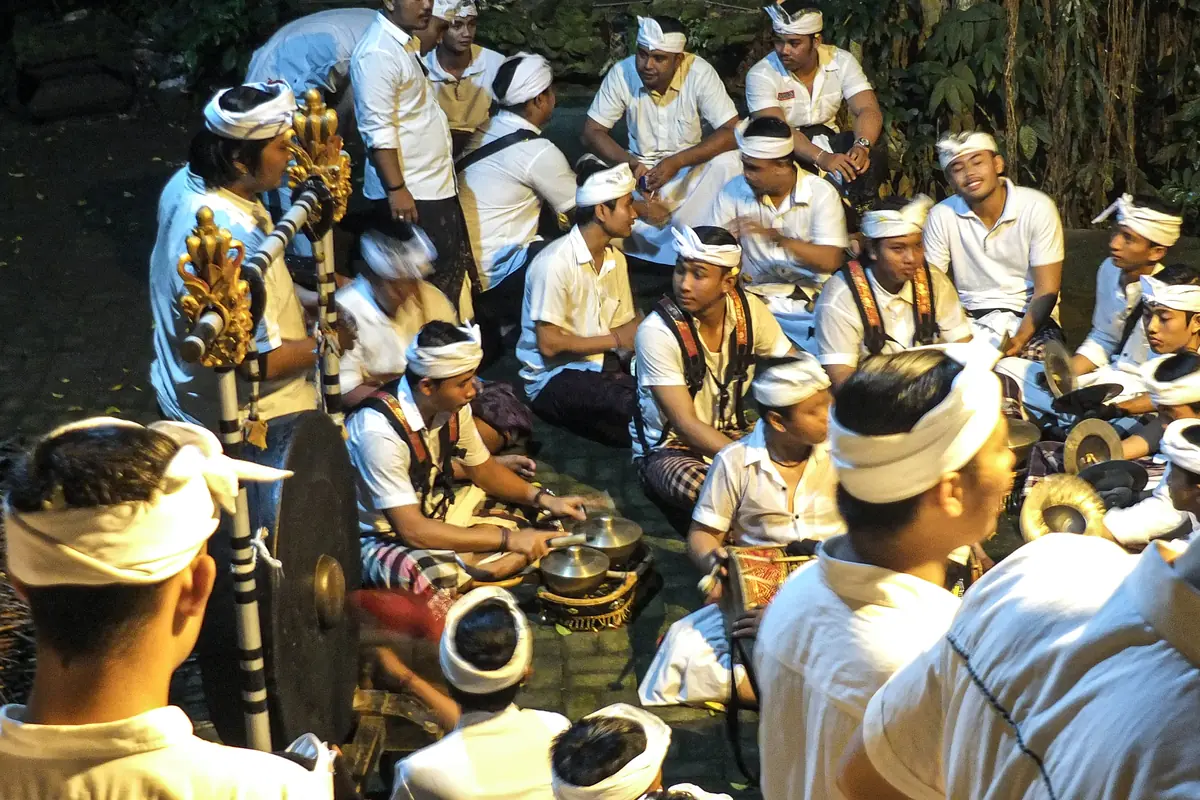
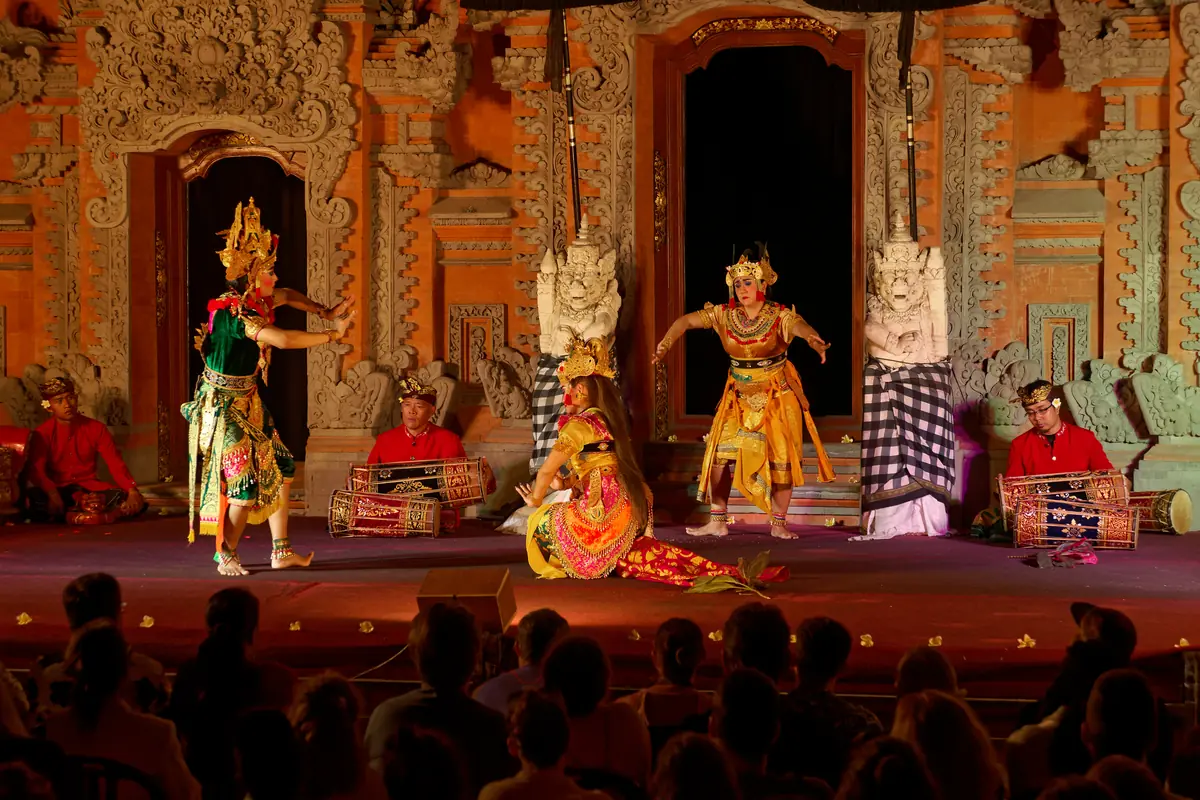
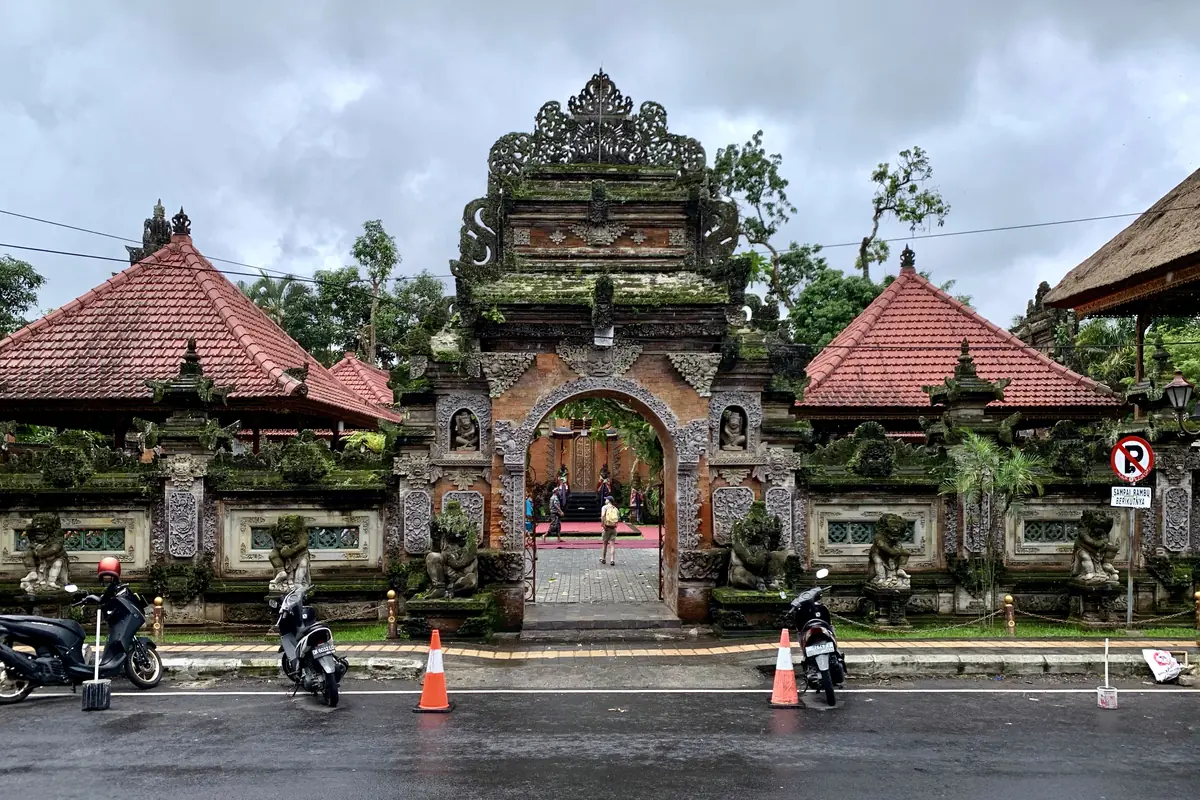
Book the evening, then fill the day
The palace legong, a kecak night, a cooking class and a countryside day
The legong is the evening. The kecak ticket is the other Ubud night to weigh against it, and the cooking class and the countryside day fill the hours before a gamelan ever starts.
Legong dance ticket at Ubud Palace
About ninety minutes of Balinese dance with a live gamelan in the palace courtyard, every evening. Entry ticket only, unreserved seating, children at the adult rate, and no refunds once booked.
Kecak and fire dance ticket in Ubud
Roughly an hour of chanted kecak on one of several Ubud stages, set by the option you choose and named on your voucher. It stays cancellable until a day before, and payment can wait until later.
Balinese cooking class with transfers in Ubud
A class of 2.5 to 3 hours at a cooking school, with transfers from central Ubud on the morning and afternoon options and a market visit on the morning one. Classes are taught in English.
Rice terraces, Monkey Forest and a waterfall in a day
A private nine-hour day with an English-speaking driver-guide and pickup in Ubud: the Sacred Monkey Forest, the Tegalalang terraces, the Tirta Empul water temple, a coffee plantation and Tibumana waterfall. Expect uneven paths and steps.
More to book in and around Ubud
Walking to the palace
Getting to the palace on foot
- Where it is
- Ubud Palace is in the centre of Ubud, a town in Gianyar regency, at the junction of Jalan Monkey Forest and Jalan Raya Ubud.
- On foot
- Jalan Raya Ubud runs east to west through the centre, and Jalan Monkey Forest and Jalan Hanoman run south from it. From any of the three, walk.
- By taxi
- Metered taxis and ride-hailing pickups are not permitted within Ubud. Rides come through the local taxi cooperative, and the price is settled with the driver first.
- At the palace
- Show your voucher at the palace. Allow at least 45 minutes before the start shown on your ticket for a good seat.
- Afterwards
- Everyone leaves at once onto the main street. If you are being collected, settle the pickup point before the dancing starts.
- Nearby
- The Ubud Monkey Forest lies near the southern end of Jalan Monkey Forest, which makes an afternoon there an easy prelude.
Read before the gamelan starts
Six guides to a night of legong in Ubud
- Start here
Ubud Palace legong: worth it?
What the ninety minutes at Ubud Palace hold, whether to book or buy at the gate, who the evening suits, and why the ticket cannot be refunded. Into the guide → - The comparison
Legong or kecak in Ubud?
Court dance with a gamelan at the palace, or the chanted kecak with fire: how the two Ubud evenings differ in music, story, length, venue and booking terms. Into the guide → - The story
The legong's Lasem story
The king of Lasem, the princess Rangkesari, the condong and the bird of ill omen: the tale behind the legong kraton, scene by scene, with sources. Into the guide → - The music
The gamelan behind the legong
What the orchestra at the palace is made of, why paired bronze instruments shimmer, how interlocking parts work, and how kebyar changed the legong's fortunes. Into the guide → - Getting there
Walking to Ubud Palace
Where the palace stands in central Ubud, why walking beats a ride, how taxis work in town, when to arrive for a good seat, and getting home after the show. Into the guide → - Plan the day
An Ubud day before the legong
How to fill the day around a legong evening: a Balinese cooking class in the afternoon, or a countryside day of temples and rice terraces the day before. Into the guide →
FAQ
What people ask before the palace dance
Is the Ubud Palace legong worth it?
Yes, for most visitors to Ubud. You get about ninety minutes of Balinese dance, the legong among it, with a live gamelan in a royal courtyard at a low price. Expect hard benches and loud music rather than a polished production, and book only once your date is fixed.
Do I need to book in advance?
No. Tickets are also sold at the palace gate. Booking ahead settles your ticket before you arrive, but it does not reserve a seat: seating is unreserved, so arriving at least 45 minutes early matters more than when you buy.
Can I move or cancel the booking?
Neither. Once confirmed the ticket is non-refundable, so the free cancellation most GetYourGuide activities offer does not apply here. It works for one date only, rain or shine.
How long is the show?
Close to ninety minutes. The start time is printed on your ticket; reach the palace well ahead of it.
Do children need a ticket?
Yes. Children pay the same rate as adults. The gamelan is loud near the stage, so younger children may be happier a few rows back.
Is the legong the only dance?
No. An evening at the palace is a sequence of Balinese dances, and the legong is one of them. Which dances appear, and in what order, is the company's choice.
Can wheelchair users attend?
Yes; wheelchairs and pushchairs can reach the venue. The seating is on benches, so bring something soft to sit on if hard seats bother you.
Who sells the ticket?
Globaltix Indonesia, a ticket reseller, lists it on GetYourGuide. The voucher arrives from GetYourGuide, whose app handles any booking query.
Is this Ubud Palace's own website?
No. Ubud Palace Legong Guide is an independent travel guide with no tie to the palace, the dance company or the reseller, and none of them runs this site. You book on GetYourGuide.